Stonehenge
Team
Me!
Location
Baton Rouge, Louisiana
Year
2020-2024
Role
Individual Researcher
Info
This four-year research project was an eye-opening and rocky path towards my understanding of prehistoric Stonehenge innovators. I mathematically reverse-engineered a blind spot that exists in all previous Stonehenge studies: measuring instruments. Alongside this conclusion, I discovered a matching geometric pattern between Stonehenge and the lozenge artifacts. Based on this geometric pattern and fundamental ratios, I discovered prehistoric protractors and rulers from these gold lozenges, the fundamental unit of length behind the rulers, the application of this fundamental unit in the design and construction of Stonehenge’s concentric rings, and finally, the use of concentric rings and lozenge-based instruments to calibrate calendrical cycles with astronomical observation.
SKILLS
Reverse Engineering, User-Centric Thinking, Mathematical Modeling, Derivation
Overview
There is only one Stonehenge in the world. Academically speaking, this single site has inspired at least two academic fields, modern Archaeology pioneered by William Stukeley, and archaeoastronomy largely attributed to Norman Lockyer, Alexander Thom, and Gerald Hawkins.
However, despite this multi-century dissent between top scholars from diverse academic backgrounds, little agreement has been established regarding Stonehenge itself. While the claims of “solved” or “decoded” have been declared multiple times and later disproven, I took a rather unconventional approach, that is to reverse-engineer the design and operation of Stonehenge. It is the innovative thinking and practice behind the physical presence of Stonehenge that were critically concerned in this inquiry.
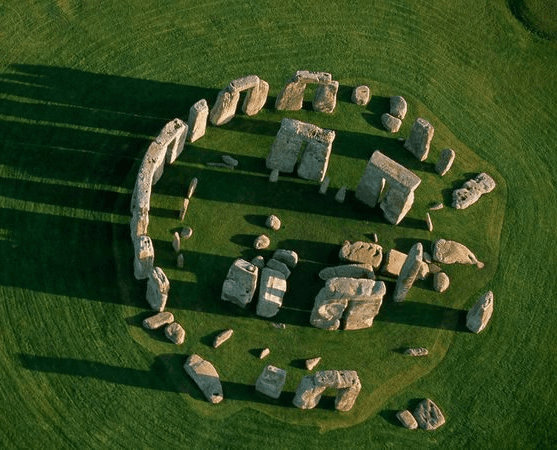
Stonehenge Site Plan
this is the birds eye view of stonehenge. this perspective was crucial in overlaying the upscaled lozenge artifacts that served as the backbone of most findings
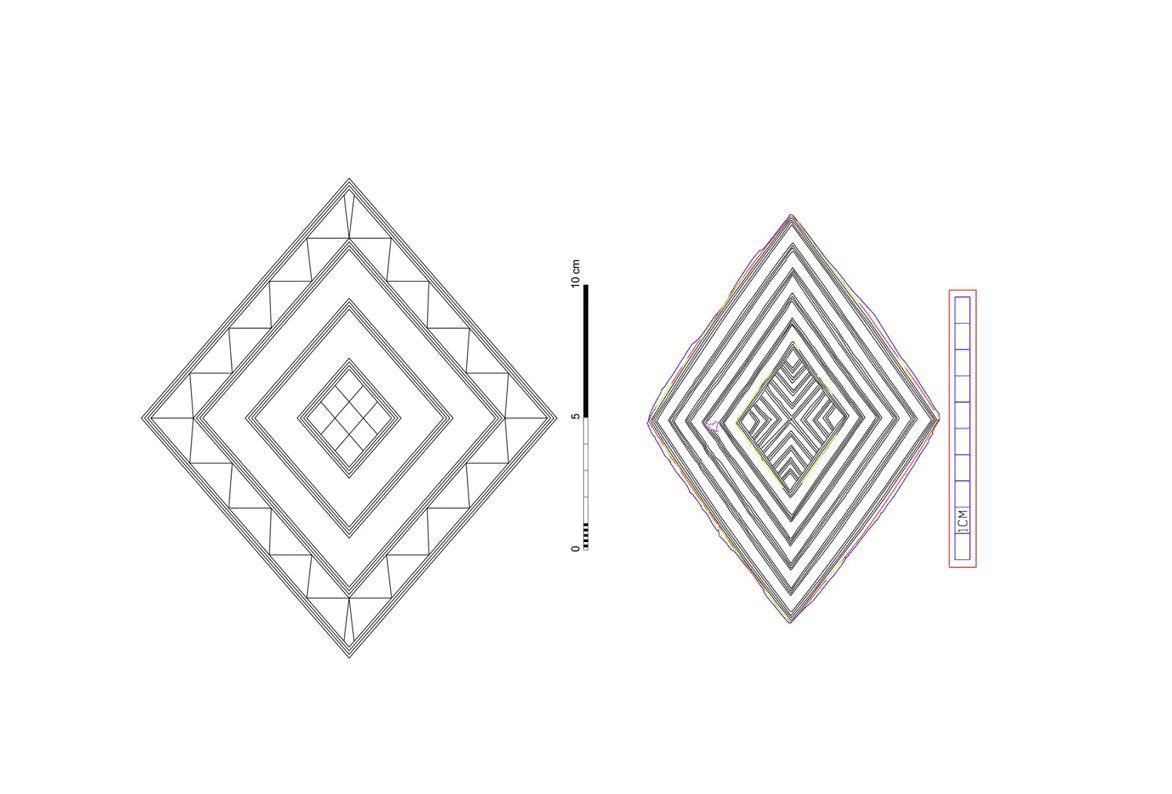
Lozenge Artifact Models
The Bush Barrow Lozenge (left) and the Clandon Barrow Lozenge (right) were the primary artifacts behind the pattern, protractor, design, and time-keeping mechanisms.
Nested Square Pattern Derivation
This animation details the simple geometry used to derive the shared pattern match between both the lozenges and Stonehenge's site plan
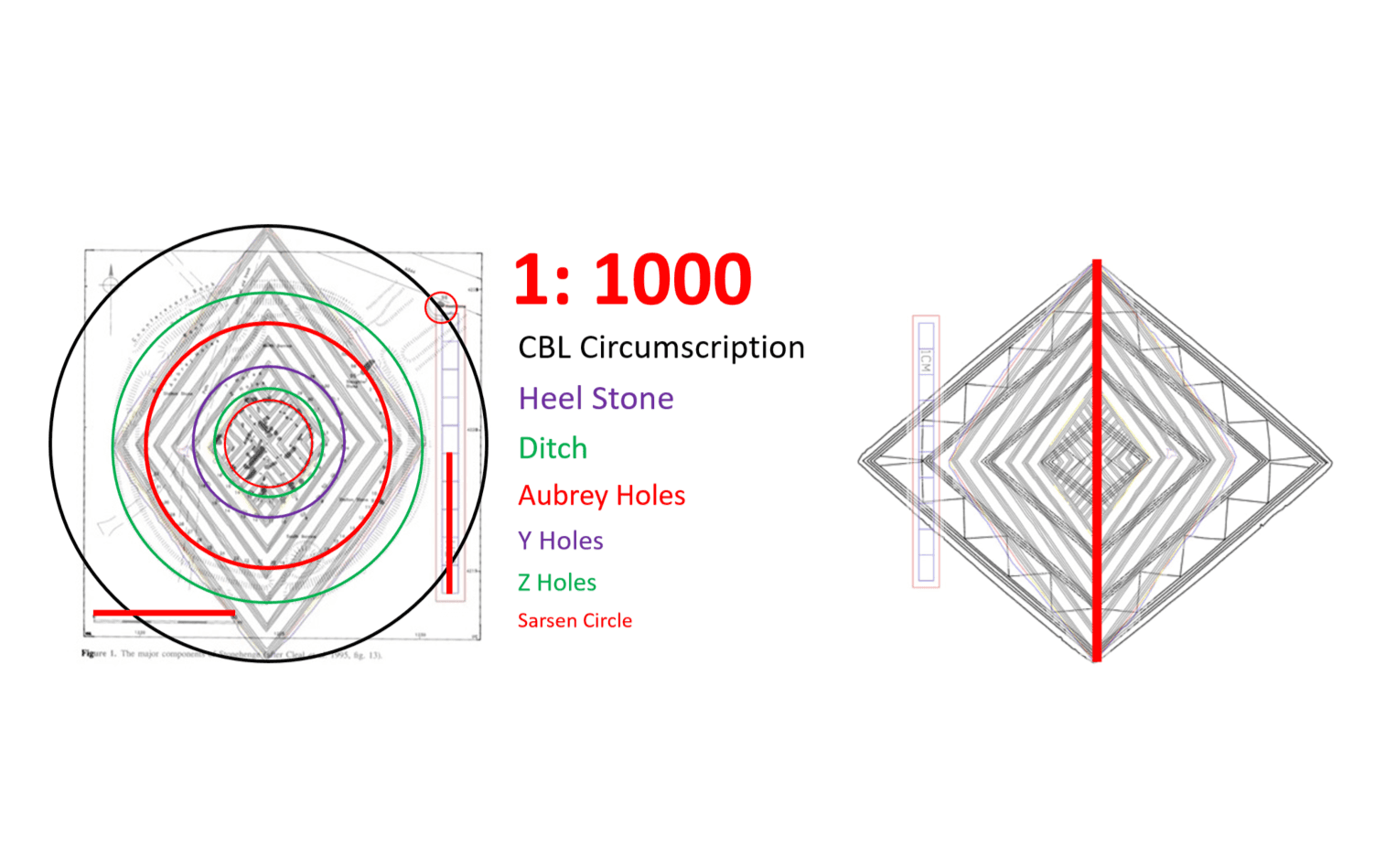
Text 3.1 TItle
This enlightening 1:1000 ratio between the Stonehenge site plan and Clandon Barrow lozenge long axis (1) confirms the nested square pattern and (2) confirms the existence of rulers/measuring instruments in the lozenge unit used to construct Stonehenge.
Text 3 Title
text 3
Module Method (Proposed method for the design and construction of Stonehenge)
this animation details
Protractor Mechanism
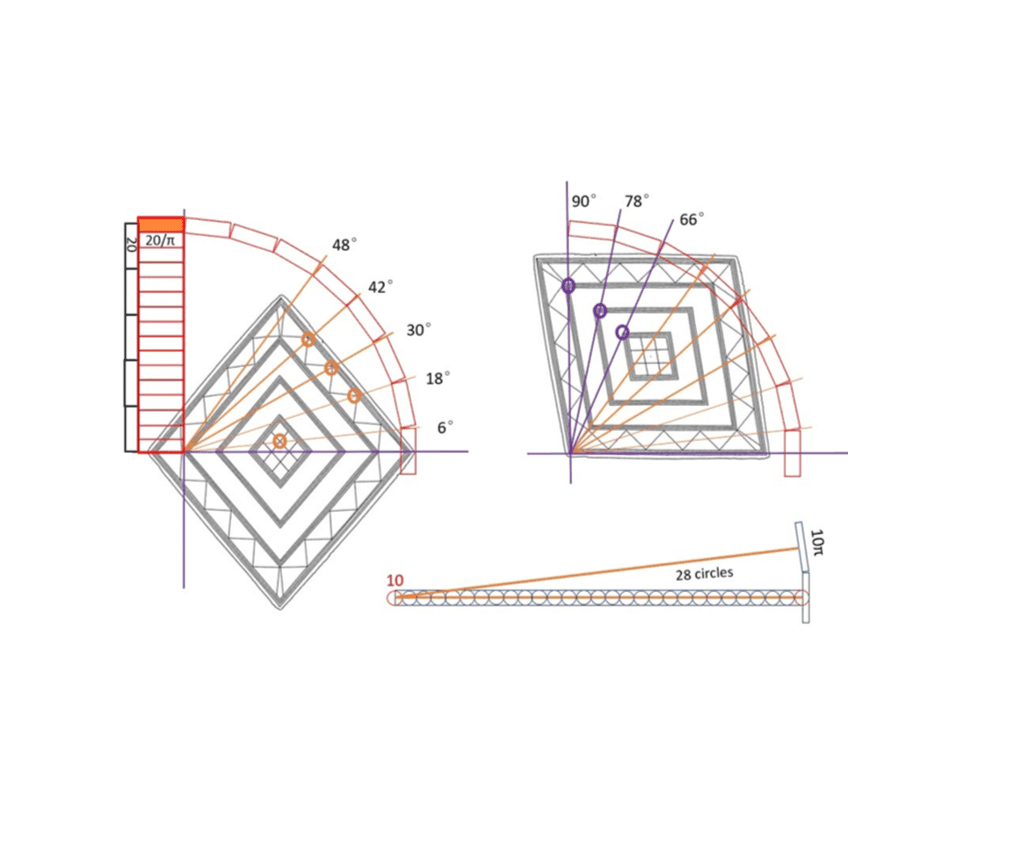
also protractor stuff
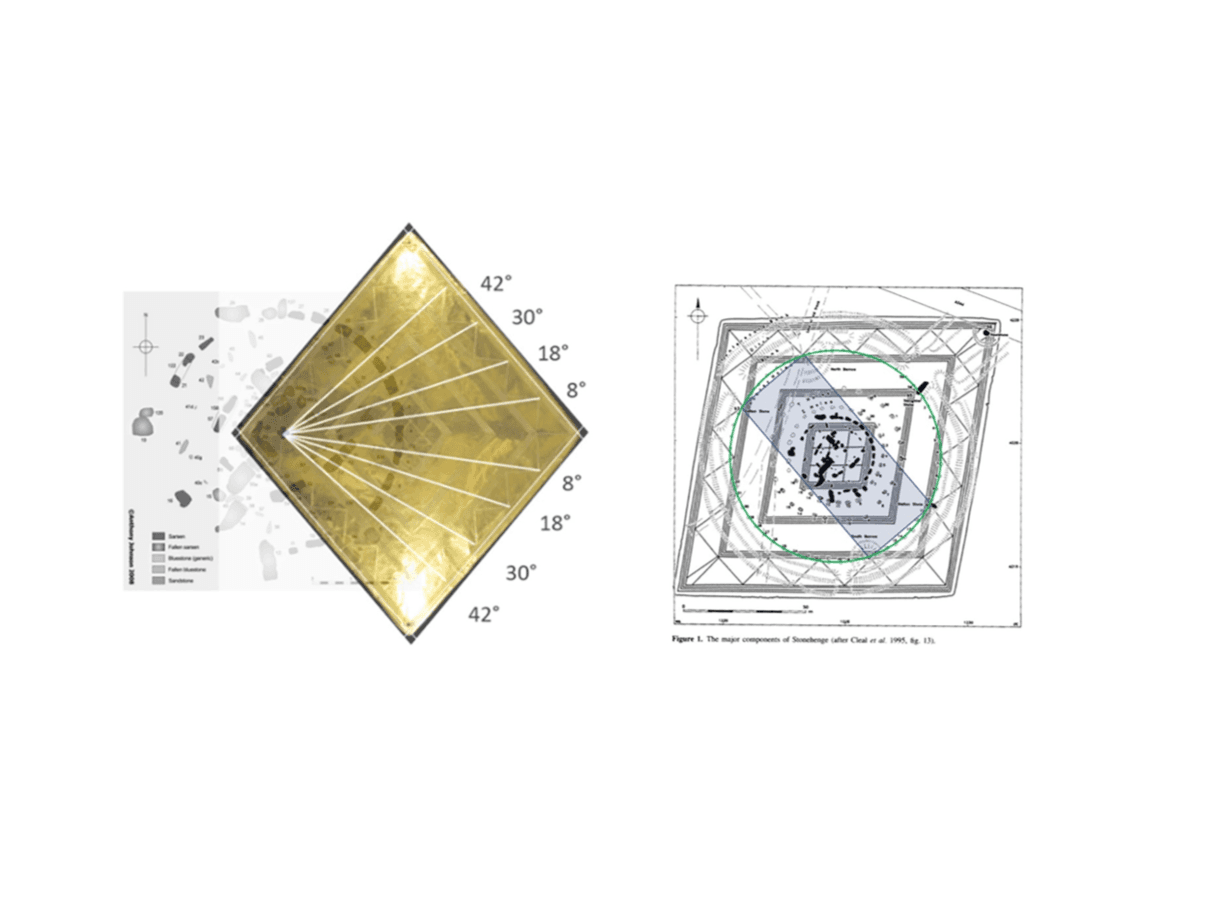
Protractor Mechanism
this is the animation derivation for the precise, sub-degree protractor mechanism for the lozenges and their application when used in junction with Stonehenge.